
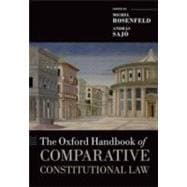
The Oxford Handbook of Comparative Constitutional Law
by Rosenfeld, Michel; Sajo, AndrasFormat: Hardcover
Pub. Date: 2012-07-05
Publisher(s): Oxford University Press
 Other versions by this Author
-

This Item Qualifies for Free Shipping!*
*Excludes marketplace orders.

List Price: $235.19
Buy New
Arriving Soon. Will ship when available.
$223.99
Rent Textbook
Select for Price
Digital
$62.39
Used Textbook
We're Sorry
Sold Out
Summary
The field of comparative constitutional law has grown immensely over the past couple of decades. Once a minor and obscure adjunct to the field of domestic constitutional law, comparative constitutional law has now moved front and centre. Driven by the global spread of democratic government and the expansion of international human rights law, the prominence and visibility of the field, among judges, politicians, and scholars has grown exponentially. Even in the United States, where domestic constitutional exclusivism has traditionally held a firm grip, use of comparative constitutional materials has become the subject of a lively and much publicized controversy among various justices of the U.S. Supreme Court. The trend towards harmonization and international borrowing has been controversial. Whereas it seems fair to assume that there ought to be great convergence among industrialized democracies over the uses and functions of commercial contracts, that seems far from the case in constitutional law. Can a parliamentary democracy be compared to a presidential one? A federal republic to a unitary one? Moreover, what about differences in ideology or national identity? Can constitutional rights deployed in a libertarian context be profitably compared to those at work in a social welfare context? Is it perilous to compare minority rights in a multi-ethnic state to those in its ethnically homogeneous counterparts? These controversies form the background to the field of comparative constitutional law, challenging not only legal scholars, but also those in other fields, such as philosophy and political theory. Providing the first single-volume, comprehensive reference resource, theOxford Handbook of Comparative Constitutional Lawwill be an essential road map to the field for all those working within it, or encountering it for the first time. Leading experts in the field examine the history and methodology of the discipline, the central concepts of constitutional law, constitutional processes, and institutions - from legislative reform to judicial interpretation, rights, and emerging trends.
Author Biography
Michel Rosenfeld is the Justice Sydney L. Robins Professor of Human Rights at the Benjamin N. Cardozo School of Law, where he is also Director of the Program on Global and Comparative Constitutional Theory. He is the co-editor-in-chief of International Journal of Constitutional Law and the author or co-editor of numerous books, including Law, Justice, Democracy, and the Clash of Cultures: A Pluralist Account (2010) and The Identity of the Constitutional Subject: Selfhood, Citizenship, Culture and Community (2009). Professor Rosenfeld is the recipient of the French government's highest and most prestigious award, the Legion of Honour.
Andras Sajo is a judge at the European Court of Human Rights, Strasbourg. He is also a University Professor at CEU and Global Visiting Professor of Law at New York University Law School. Professor Sajo was the founding dean of Legal Studies at CEU. He is the author or editor of numerous books, including, with Michel Rosenfeld, Norman Dawson, and Susanne Baer, Comparative Constitutions: Cases and Materials (2003).
Table of Contents
Michel Rosenfeld and Andras Sajo: Introduction
Part I: History, Methodology, and Typology
1: Comparative Constitutional Law: A Contested Domain
A: Armin von Bogdandy: Comparative Constitutional Law: A Continental Perspective
B: Michel Rosenfeld: Comparative Constitutional Analysis in United States Adjudication and Scholarship
2: Vicki Jackson: Comparative Constitutional Law: Methodologies
3: Peer Zumbansen: Carving out Typologies and Accounting for Differences Across Systems: Towards a Methodology of Transnational Constitutionalism
4: Dieter Grimm: Types of Constitutions
5: Li-ann Thio: Constitutionalism in Illiberal Polities
6: Arun Thiruvengadam and Gedion Hessebon: Constitutionalism and Impoverishment: A Complex Dynamic
7: Stephen Gardbaum: The Place of Constitutional Law in the Legal System
Part II: Ideas
8: Stephen Holmes: Constitutions and Constitutionalism
9: Mark Tushnet: Constitution
10: Martin Krygier: Rule of Law
11: Günter Frankenberg: Democracy
12: Olivier Beaud: Conceptions of the State
13: Robert Alexy: Rights and Liberties as Concepts
14: Frank Michelman: Constitutions and the Public/Private Divide
15: Janos Kis: State Neutrality
16: Roberto Gargarella: The Constitution and Justice
17: Michel Troper: Sovereignty
18: Matthias Mahlmann: Human Dignity and Autonomy in Modern Constitutional Orders
19: Catharine Mackinnon: Gender in Constitutions
Part III: Process
20: Claude Klein and András Sajó: Constitution-Making as a Process
21: David Dyzenhaus: States of Emergency
22: Yasuo Hasebe: War Powers
23: Susanna Mancini: Secession and Self-Determination
24: Laurence Morel: Referendum
25: Richard Pildes: Elections
Part IV: Architecture
26: Jenny S. Martinez: Horizontal Structuring
27: Daniel Halberstam: Federalism: Theory, Policy, Law
28: Sergio Bartole: Internal Ordering in the Unitary State
29: Héctor Fix-Fierro and Pedro Salazar-Ugarte: Presidentialism
30: Anthony W. Bradley and Cesare Pinelli: Parliamentarism
31: Susan Rose-Ackerman: The Regulatory State
Part V: Meanings/Textures
32: Jeffrey Goldsworthy: Constitutional Interpretation
33: Bernhard Schlink: Proportionality (1)
34: Aharon Barak: Proportionality (2)
35: Michel Rosenfeld: Constitutional Identity
36: Gary Jeffrey Jacobsohn: Constitutional Values and Principles
Part VI: Institutions
37: Juliane Kokott and Martin Kaspar: Ensuring Constitutional Efficacy
38: Alec Stone Sweet: Constitutional Courts
39: Roderick A MacDonald and Hoi Kong: Judicial Independence as a Constitutional Virtue
40: Daniel Smilov: The Judiciary: The Least Dangerous Branch?
41: Cindy Skach: Political Parties and the Constitution
Part VII: Rights
42: Eric Barendt: Freedom of Expression
43: András Sajó and Renáta Uitz: Freedom of Religion
44: Richard Vogler: Due Process
45: Ulrich Preuss: Associative Rights (The Rights to the Freedoms of Petition, Assembly, and Association)
46: Manuel Jose Cepeda Espinosa: Privacy
47: Susanne Baer: Equality
48: Ayelet Shachar: Citizenship
49: D M Davis: Socio-Economic Rights
50: K D Ewing: Economic Rights
Part VIII: Overlapping Rights
51: Reva Siegel: The Constitutionalization of Abortion
52: Kenji Yoshino and Michael Kavey: Immodest Claims and Modest Contributions: Sexual Orientation in Comparative Constitutional Law
53: Sujit Choudhry: Group Rights in Comparative Constitutional Law: Culture, Economics, or Political Power?
54: Daniel Sabbagh: Affirmative Action
55: Judit Sándor: Bioethics and Basic Rights: Persons, Humans and Boundaries of Life
Part IX: Trends
56: Wen-Chen Chang and Jiunn-Rong Yeh: Internationalization of Constitutional Law
57: Neil Walker: The European Union's Unresolved Constitution
58: Erika de Wet: The Constitutionalization of Public International Law
59: Dean Spielmann: Jurisprudence of the European Court of Human Rights and the Constitutional Systems of Europe
60: Jan-Werner Müller: Militant Democracy
61: Juan Mendez: Constitutionalism and Transitional Justice
62: Chibli Mallat: Islam and the Constitutional Order
63: Vlad Perju: Constitutional Transplants, Borrowing, and Migrations
64: Gabor Halmai: The Use of Foreign Law in Constitutional Interpretation
Part I: History, Methodology, and Typology
1. Comparative Constitutional Law: A Contested Domain, Armin von Bogdandy
2. Methodologies, Vicki Jackson
3. Carving out Typologies: Accounting for System Differences, Peer Zumbansen
4. Types of Constitution in Contemporary History from 18th Century Classic Liberal to Post-Colonial and Post Authoritarian, Dieter Grimm
5. Constitutionalism in Illiberal Polities, Thio Li-ann
6. Constitutionalism Under the Constraints of Poverty, Arun Thiruvengadam
7. The Place of Constitutional Law in the Legal System, Stephen Gardbaum
Part II: Ideas
8. Constitutionalism, Stephen Holmes
9. Constitution, Mark Tushnet
10. Rule of Law, Martin Krygier
11. Democracy, Gunter Frankenberg
12. Conceptions of the State, Olivier Beaud
13. Rights and Liberties as Concepts, Robert Alexy
14. Constitutions and the Public/Private Divide, Frank Michelman
15. State Neutrality, Janos Kis
16. The Constitution and Justice, Roberto Gargarella
17. Sovereignty, Michel Troper
18. Dignity and Autonomy, Matthias Mahlmann
19. Gendered Visions of the Constitution, Catharine Mackinnon
Part III: Process
20. Constitution-Making as a Process, Claude Klein
21. Emergencies, David Dyzenhaus
22. War Powers, Yasuo Hasebe
23. Self-Determination and Secession, Susanna Mancini
24. Referendum, Laurence Morel
25. Elections, Richard Pildes
Part IV: Architecture
26. Horizontal Structuring, Jenny Martinez
27. Vertical Structuring, Daniel Halberstam
28. Internal Ordering in the Unitary State, Sergio Bartole
29. The Constitution and Powers of the Judiciary, Mattias Kumm
30. Presidentialism, Hector Fix-Fierro
31. Parliamentarism, Anthony Bradley and Cesare Pinelli
32. Regulatory State, Susan Rose-Ackerman
Part V: Meanings/Textures
33. Interpreting the Constitution, Jeffrey Goldsworthy
34. Proportionality (1), Bernhard Schlink
35. Proportionality (2), Aharon Barak
36. Constitutional Identity, Michel Rosenfeld
37. Constitutional Values and Principles, Gary Jacobsohn
Part VI: Institutions
38. Ensuring Constitutional Efficacy, Juliane Kokott and Martin Kaspar
39. Constitutional Courts, Alec Stone Sweet
40. Judiciary and Judicial Independence, Roderick MacDonald and Hoi Kong
41. Political Parties, Cindy Skach
Part VII: Rights
42. Freedom of Expression, Eric Barendt
43. Freedom of Religion, Andras Sajo and Renata Uitz
44. Due Process, Richard Vogler
45. Associative Rights, Ulrich Preuss
46. Privacy, Manuel Jose Cepeda Espinosa
47. Equality, Susanne Baer
48. Citizenship, Ayelet Shachar
49. Social Rights, Dennis Davis
50. Rights in Economic Life, Keith Ewing
Part VIII: Overlapping Rights
51. Abortion, Reva Siegel
52. Rights Based on Sexual Orientation, Kenji Yoshino and Michael Kavey
53. Group Rights, Sujit Choudhry
54. Affirmative Action, Daniel Sabbagh
55. Bioethics, Judit Sandor
Part IX: Trends
56. Internationalization of Constitutional Law, Wen-Chen Chang
57. European Constitution, Neil Walker
58. Constitutionalization of International Law, Erika de Wet
59. Constitutional Transformation and Transitional Justice, Juan Mendez
60. Islam and Constitutional Ordering, Chibli Mallat
61. International Constitutional Courts, Miguel Maduro
62. ECtHR Jurisprudence on the Constitutional Systems of Europe, Dean Spielmann
63. Militant Democracy, Jan-Werner Mueller
64. Constitutional Borrowing and Transplants, Vlad Perju
65. History of Comparative Constitutional Law, Otto Pfersmann
66. The Use of Comparative Constitutional Law in Constitutional Adjudication, Gabor Halmai
An electronic version of this book is available through VitalSource.
This book is viewable on PC, Mac, iPhone, iPad, iPod Touch, and most smartphones.
By purchasing, you will be able to view this book online, as well as download it, for the chosen number of days.
Digital License
You are licensing a digital product for a set duration. Durations are set forth in the product description, with "Lifetime" typically meaning five (5) years of online access and permanent download to a supported device. All licenses are non-transferable.
More details can be found here.
A downloadable version of this book is available through the eCampus Reader or compatible Adobe readers.
Applications are available on iOS, Android, PC, Mac, and Windows Mobile platforms.
Please view the compatibility matrix prior to purchase.